Michaels 18.5oz Canva Frame Tumbler
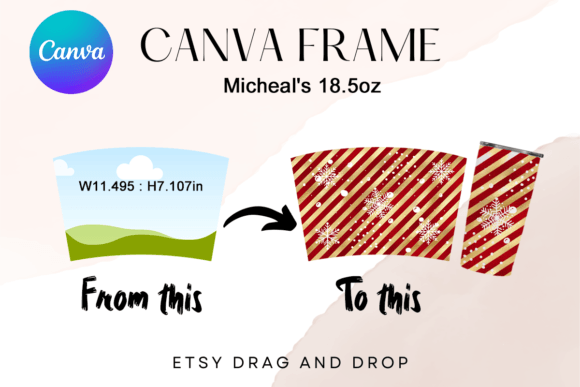
As a designer who’s stitched over 300 custom projects—from boutique baby onesies to Etsy best-selling tote bags—I opened the Michaels 18.5oz Canva Frame Tumbler file expecting something clean and versatile. What I found was a quietly confident frame design: balanced, centered, and built for clarity—not flash. At 11.495 x 7.107 inches, it’s sized for visibility without overwhelming smaller garments or accessories. It doesn’t scream “look at me.” Instead, it says, “I belong here”—on a linen tea towel folded beside a coffee bar, on the chest of a relaxed-fit sweatshirt, or as a subtle accent on a nursery pillow cover.
A Real-World Test: Stitching It onto a Linen-Cotton Blend Tote
Last week, I prepped a set of personalized totes for a local café’s staff gift bundle—light beige linen-cotton blend, medium weight, slightly textured. I uploaded the Michaels 18.5oz Canva Frame Tumbler into my embroidery software, scaled it to fit a 5x7 hoop (the natural sweet spot), and ran a test on scrap fabric first. The frame held up beautifully: clean outer edges, open interior space that left room for a short monogram or small icon, and proportions that didn’t distort when hooped. No puckering. No thread nesting in corners. That tells me the underlying vector logic is sound—no jagged nodes or overlapping paths that cause stitch jumps or density spikes.
Where This Frame Design Truly Shines
- Custom apparel: Works cleanly on crewneck sweatshirts and relaxed tees—especially with minimal fill stitch areas that breathe on knit fabrics.
- Personalized gifts: Ideal for baby embroidery on burp cloths or bibs—its open center lets you add a tiny embroidered name or birth date without crowding.
- Tote bag design: Scales well across canvas, denim, and medium-weight cotton—no loss of definition at 8–10 inches wide.
- Holiday embroidery: Paired with a simple evergreen sprig or minimalist snowflake inside the frame, it becomes an elegant, repeatable motif for seasonal kitchen towels or aprons.
- Commercial embroidery: Clean lines and consistent spacing mean it digitizes predictably across multiple machines—fewer re-hooping stops, less thread breakage.
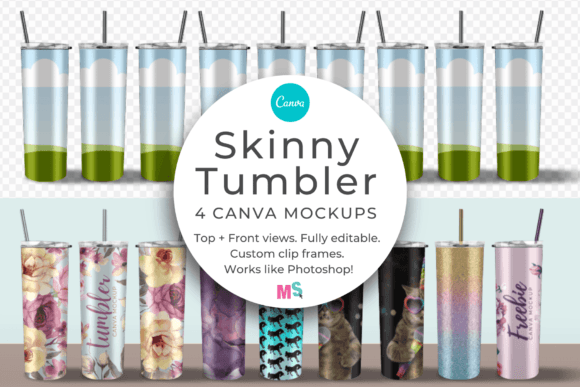
- Digital product previews: As a Canva graphics asset, it’s easy to drop into mockups—great for Etsy sellers building cohesive listings without hiring a graphic designer.
Where to Proceed Thoughtfully
The Michaels 18.5oz Canva Frame Tumbler isn’t magic—it’s a tool. And like any tool, its success depends on context. On thin or stretchy fabric (like lightweight jersey or rayon challis), I’d reinforce with cutaway + tear-away stabilizer—especially along the outer border where satin stitch might pull. On dark fabric, test thread color contrast early: light gray or cream thread reads softly but elegantly; neon or pastel threads risk fading visually unless paired with dense fill stitch.
Curved surfaces—like structured caps or tapered mugs—require careful placement. This frame assumes a flat plane. If you’re stitching on a curved item, consider reducing width by 5–10% and adding a slight curve adjustment in your software. Also, avoid cramming fine details (tiny script, micro-icons) into the inner space—the PDF template gives you room, but your machine’s minimum stitch length and fabric grain will dictate what actually lands cleanly.
How It Shapes Perception—and Sales
Customers don’t buy frames—they buy intention. A well-placed, balanced frame like the Michaels 18.5oz Canva Frame Tumbler signals care: that the maker considered scale, spacing, and harmony. On an Etsy listing, it elevates a plain sweatshirt from “nice” to “curated.” In a boutique setting, it adds quiet professionalism to handmade product photography. And for craft fair shoppers? It makes a $32 embroidered pillow cover feel worth every penny—not because it’s flashy, but because it feels *considered*.
I’ve seen buyers scroll past busy, unbalanced designs—even technically perfect ones—because they read as chaotic. This frame avoids that. Its rhythm is calm. Its margins are generous. Its proportions support legibility, not just decoration. That builds trust. And trust converts.
Practical Embroidery Designer Notes
- Always test on scrap fabric first—especially with your exact stabilizer, thread brand, and fabric combo.
- Check thread color contrast in both natural and artificial light—some creams look warm indoors but cool under fluorescent shop lighting.
- Review stitch density before finalizing: high-density borders can stiffen lightweight fabrics; low-density fills may look sparse on dark backgrounds.
- Confirm hoop size compatibility: While the PDF gives dimensions, verify your machine’s max stitch area fits comfortably within your hoop’s usable space.
- Inspect small details at 200% zoom in your embroidery software—look for stray nodes, overlapping stitches, or abrupt angle shifts.
- Test in black-and-white mockups to assess visual weight and hierarchy before committing to color.
- Compare performance on light vs. dark fabric using identical settings—you’ll often adjust tension or underlay for optimal results.
- Use proper stabilizer: medium-weight cutaway for stable wovens, soft tear-away for knits, and fusible + tear-away for slippery fabrics like satin or silk-blend.
- Verify licensing before selling finished products or bundling this as part of a digital embroidery file pack—this is a digital embroidery file, not a commercial-use license by default.
The Michaels 18.5oz Canva Frame Tumbler won’t replace your favorite script font or floral motif—but it’s the steady hand behind them. It’s the foundation that lets other elements shine without competing. For craft business owners, Etsy sellers, and makers who value clarity over clutter, it’s not just another graphics asset. It’s a quiet upgrade in how your handmade product communicates care, consistency, and confidence—before a single stitch is made.