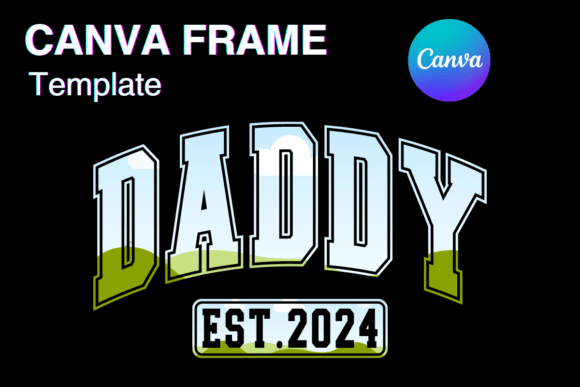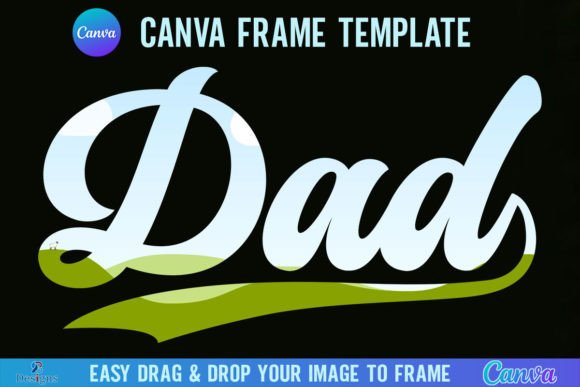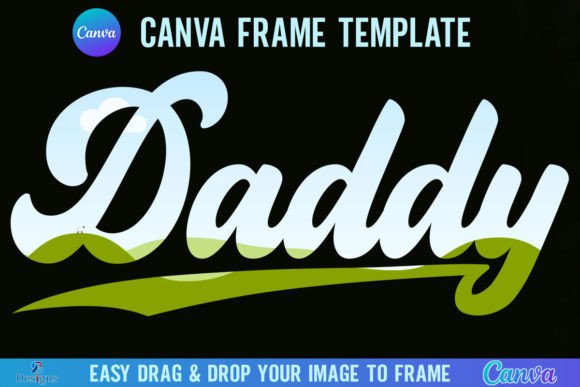
Retro Daddy Canva Template Frame Graphics
First Impression: Warm, Nostalgic, and Instantly Cohesive
When I opened the Retro Daddy Canva Template Frame for a client project—a summer-themed handmade candle line launching on Etsy—the first thing that struck me was its authentic retro warmth. Not kitschy or forced, but grounded in mid-century Americana: soft sun-faded palettes, hand-drawn linework, subtle halftone textures, and confident asymmetry. It’s not “vintage-inspired” as decoration—it *feels* lived-in. That matters immensely when you’re building brand identity for a small business owner who sells soy wax candles with names like “Papa’s Porch Light” and “Sunday Drive.” This graphic design asset doesn’t shout—it leans in, invites familiarity, and quietly reinforces emotional resonance.
Where It Shines in Real Client Work
The Retro Daddy Canva Template Frame excels where personality and warmth drive engagement: product mockups for print-on-demand mugs and tote bags, Instagram carousel posts for seasonal promotions, printable wall art bundles for crafters, and Cricut-ready sticker sheets for local farmers’ market vendors. I used it to frame a set of custom candle labels—layering it over matte kraft paper mockups—and the result felt cohesive without needing heavy retouching. Its balanced negative space supports readability while adding decorative weight. As a social media graphics anchor, it elevates otherwise flat product shots into editorial-style moments. For bloggers and content creators building themed Pinterest pins or blog headers, it delivers instant mood without sacrificing clarity.
Strongest Use Cases
- Hero graphics for landing pages or email headers—especially when paired with warm-toned photography
- Packaging design accents on jar labels, box wraps, or thank-you cards for handmade businesses
- Printable design collections: recipe cards, gift tags, and vintage-style event invitations
- Merchandise layouts for t-shirt design, sublimation design, and enamel pin concepts
- Themed campaign visuals, like Father’s Day promotions, backyard BBQ launches, or retro diner pop-ups
Where Caution Is Essential
This isn’t a universal-fit asset. In minimalist branding systems—think sleek tech startups or luxury skincare lines—it overwhelms rather than enhances. I tested it against a clean sans serif logo lockup and found the contrast too jarring; visual hierarchy collapsed. It also loses definition at under 200px width—so avoid using it as a tiny favicon or app icon. On complex backgrounds (busy patterns, grainy textures), the frame’s delicate linework fades or competes. And while it works beautifully on light cream or soft peach, it needs careful contrast testing on charcoal or navy—some versions lack sufficient opacity or edge definition for dark mode reliability.
Design Judgment: Readability, Trust, and Emotional Pull
One of the most underrated strengths of Retro Daddy Canva Template Frame is how it subtly guides attention. Its curved corners and offset borders create natural eye flow toward centered copy—ideal for Instagram posts with short slogans or Etsy product titles. But I always test it with real client typography: it pairs best with friendly serifs (like Playfair Display) or relaxed sans serifs (Lora, Montserrat Light), not tight geometric fonts or ultra-thin scripts. When layered over product photos, it boosts perceived authenticity—critical for handmade business credibility. However, overuse dilutes impact. I limit it to one primary frame per campaign asset, then echo its color tones or line weight elsewhere for brand consistency.
Practical Designer Notes Before Client Deployment
You will get 1 zip file, please unzip to use. Inside is a PDF containing the direct Canva link—no third-party platforms, no broken redirects. Once accessed, the templates load instantly in Canva with editable layers. Before deploying in commercial design:
- Test the frame in black and white to confirm structural integrity—does it hold shape without color?
- Preview on both light and dark backgrounds using Canva’s background toggle
- Scale it down to 150px and up to 2000px—check for pixelation or stroke collapse
- Drop it onto realistic product mockups (not just white screens)—observe how it interacts with shadows and texture
- Print a test sheet on your client’s intended paper stock—halftones and fine lines often shift in physical output
- Verify PNG transparency: does the frame isolate cleanly from backgrounds? (Critical for sticker design and Cricut projects)
- Confirm commercial license covers all intended uses—including resale in digital products, print-on-demand, and Etsy listings
I also cross-checked compatibility with common font pairings: it harmonizes with display fonts for headlines, supports handwritten fonts for secondary messaging, and avoids clashing with bold sans serifs used in call-to-action buttons. As a standalone SVG design? Not included—but the Canva-native vector layering gives comparable flexibility for resizing and recoloring.
A Strategic Creative Asset—Not Just a Decoration
Retro Daddy Canva Template Frame isn’t filler. It’s a mood-setter, a trust-builder, and a time-saver for designers balancing speed and soul. For clients launching nostalgic-themed digital products, limited-edition packaging, or community-driven campaigns, it delivers professional polish without demanding custom illustration hours. Used intentionally—not as wallpaper, but as intentional framing—it strengthens brand recognition, deepens audience engagement, and adds tactile warmth to otherwise digital experiences. If your next project lives at the intersection of handmade business, modern design, and heartfelt storytelling, this graphic design asset earns its place in your creative toolkit.