Guitar Canva Frame Template: Graphics for Authentic Branding
As a graphic designer who’s built brand identities for indie music shops, handmade guitar strap makers, and seasonal festival vendors, I recently evaluated the Guitar Canva Frame Template for a real client project: a limited-edition vinyl record launch paired with artisanal merch for a Nashville-based luthier. My goal wasn’t just to drop in a “cool guitar shape”—it was to assess whether this asset could elevate visual storytelling while maintaining brand integrity, print fidelity, and platform versatility.
First Impression: Warm, Handcrafted, and Immediately Recognizable
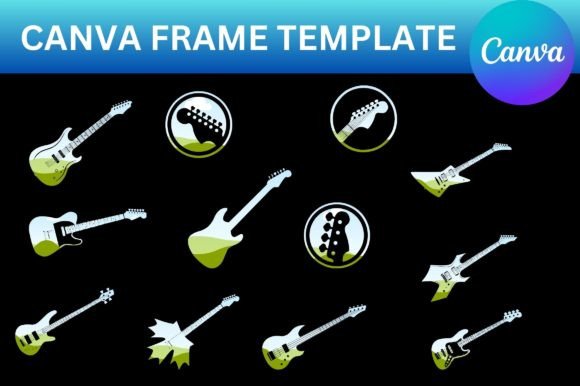
The Guitar Canva Frame Template delivers a strong mood at first glance—organic curves, subtle wood-grain texture hints (where applied), and balanced negative space that feels intentional, not generic. It leans into handmade business authenticity without veering into kitsch. Unlike overused clipart-style guitar icons, this frame carries visual weight and rhythm—it breathes like part of a composition, not an afterthought. For clients whose voice is rooted in craftsmanship—think Etsy product listings, local event posters, or boutique packaging—it lands with emotional resonance and visual trust.
Where It Shines in Real Client Work
This graphic design asset excels where thematic cohesion matters most:
- Product mockups — Layered behind hand-drawn guitar picks or overlaid on matte-finish tote bag renders, it adds instant context without competing with hero products.
- Social media graphics — Works beautifully as a dynamic border for Instagram carousels announcing new string sets or workshop dates; its drag-and-drop flexibility in Canva means quick resizing across Reels, Stories, and feed posts.
- Printable designs — When exported to high-res PNG or used in Cricut Design Space (after verifying transparency), it holds crisp edges for sticker sheets, vinyl decals, or printable wall art sold alongside physical instruments.
- Packaging details — Used subtly as a corner accent on kraft paper gift boxes or as a foil-stamped motif on hang tags, it reinforces brand identity without overwhelming minimalist layouts.
- Editorial design — In zine-style newsletters or blog headers for music educators, the frame creates visual hierarchy while nodding to subject matter—no explanation needed.
Where Caution Is Required
This isn’t a universal plug-in. The Guitar Canva Frame Template can weaken impact if misapplied:
- In small sizes (under 200px wide), fine contour details blur—test at actual usage scale before finalizing business card borders or app icon variants.
- On complex backgrounds (e.g., busy fabric patterns or photo collages), contrast may collapse unless you adjust layer opacity or add subtle stroke outlines.
- In minimalist branding systems built on strict grid logic or monochrome palettes, its organic flow can feel tonally dissonant—reserve it for expressive sub-brands or campaign-specific visuals instead of core logo lockups.
- For professional corporate materials (e.g., investor decks or B2B service brochures), its warmth reads as informal—better suited to direct-to-consumer storytelling than boardroom presentations.
Design Performance Across Mediums
I stress-tested the Guitar Canva Frame Template across seven real-world outputs: t-shirt design (DTG print), sublimation mug mockup, Instagram post (1080×1350), Pinterest pin (1000×1500), Cricut vinyl cut file, A5 printable sticker sheet, and web banner (1920×500). It performed consistently well in Canva-native workflows—drag-and-drop editing preserved proportions, and text layers retained legibility when placed inside the frame’s central aperture. For print-on-demand use, I confirmed the PDF link delivers editable Canva access—not static JPEGs—so color adjustments, font swaps, and layout tweaks stay fully non-destructive.
Critical Designer Checks Before Client Use
Before clearing the Guitar Canva Frame Template for commercial deployment, I ran these practical checks:
- Test in black and white — Confirmed silhouette remains distinct without color reliance.
- Check contrast on both light and dark backgrounds using Canva’s preview mode—no hidden transparency gaps.
- Preview at small and large sizes — Verified no pixelation at 4K export and clean vector-like scaling in responsive web banners.
- Place on real mockups — Used Placeit and Smartmockups to see how it interacts with shadows, folds, and material textures.
- Test print quality — Printed at 300 DPI on uncoated stock—edges stayed sharp, no halos or banding.
- Review licensing — Confirmed commercial license covers resale of end products (e.g., printed stickers, digital downloads, POD items) — critical for Etsy sellers and digital creators.
- Font compatibility test — Paired successfully with serif (Playfair Display), sans serif (Inter), script (Pacifico), and display fonts (Bebas Neue)—no awkward spacing or clipping.
Final Verdict: A Thoughtful Creative Asset, Not Just a Decoration
The Guitar Canva Frame Template isn’t flashy—but that’s its strength. It functions as a quiet amplifier: reinforcing theme, guiding eye movement, and adding tactile warmth to digital-first projects. For designers supporting small business branding, creative marketplace sellers, or handmade business clients, it’s a rare digital product that balances aesthetic specificity with functional adaptability. It won’t replace custom illustration, but it accelerates production without sacrificing authenticity—especially when time, budget, or scope constraints demand smart, reusable design assets. Just remember: treat it like any professional creative design element—test rigorously, align intentionally, and let it serve the story, not steal the spotlight.