Funky Wavy Stacked Canva Frame Template
First Impressions: Playful, Bold—But Is It Embroidery-Ready?
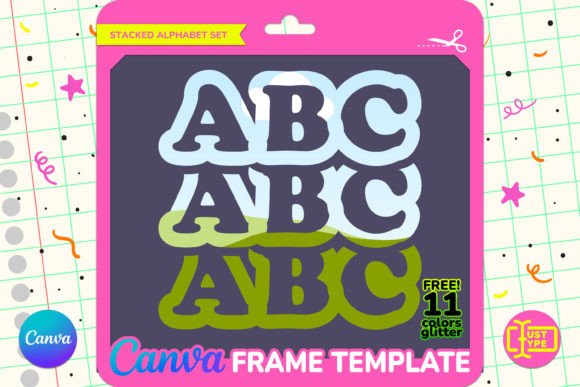
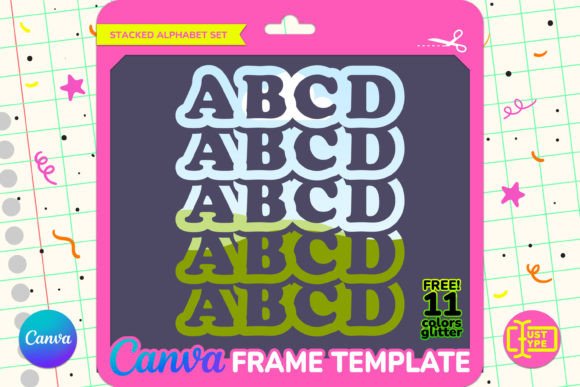
As someone who’s stitched hundreds of custom projects—from baby onesies to boutique aprons—I opened the Funky Wavy Stacked Canva Frame Template expecting whimsy. And it delivers: layered, undulating letterforms with generous negative space and rhythmic curves. Visually, it feels like a hand-drawn doodle made confident—bouncy, friendly, and unapologetically casual. That energy works beautifully for kids’ items, summer totes, or playful café merch. But here’s what I asked myself immediately: Will those wavy edges hold up under satin stitch? Will the stacked layout crowd small hoops? Does “funky” translate to legibility—or just visual noise on fabric?
A Real Test: Stitching It on a Linen Kitchen Towel
I used the Funky Wavy Stacked Canva Frame Template to personalize a natural linen tea towel for a local maker’s holiday pop-up. My goal was a clean, gift-ready look—not a busy digital print, but something that felt handmade and intentional. I dragged in a simple floral motif (from my own embroidery-safe library) into the frame’s open letter areas, then exported a high-res mockup to preview scale and spacing. What stood out right away was how well the template’s generous internal clearances accommodated even modestly detailed fill-stitch elements—no clipping, no awkward crowding. The waves aren’t razor-thin; they’ve got breathing room. That’s huge for real-world stitching.
Where It Shines—and Where to Pause
The Funky Wavy Stacked Canva Frame Template excels in contexts where personality matters more than precision: embroidered patches for denim jackets, sweatshirt chest logos, pillow covers for nurseries, and tote bags sold at craft fairs. Its rhythm reads clearly at 3–4 inches wide—the sweet spot for most commercial embroidery projects. On baby onesies? Yes—but only if you simplify interior graphics and avoid tight corners. On curved cap fronts? Proceed with caution: the lower wave bends sharply, and dense satin stitching there can pucker without proper stabilizer and careful hooping.
It’s less ideal for thin or highly stretchy fabrics (think lightweight jersey tees) unless you add cutaway stabilizer and reduce stitch density manually. Dark fabrics demand thoughtful thread color choices—those wavy outlines need contrast to read, especially in low-light gifting scenarios like holiday stockings or nursery wall hangings. And while it’s charming on textured linens or canvas, avoid pairing it with heavily napped fleece or bouclé: fine wave details get lost.
Design Integrity Meets Customer Trust
When your Etsy buyer orders a “personalized embroidered apron,” they’re not just buying fabric—they’re buying confidence in your taste and craftsmanship. The Funky Wavy Stacked Canva Frame Template supports that trust because it looks intentionally designed, not slapped together. Its balanced asymmetry avoids the “clipart” feel that undermines handmade presentation. Customers recognize effort—even subconsciously—and this template signals care in composition. That lifts perceived value, especially alongside premium finishes like merrowed edges or contrasting bobbin thread.
That said, its playful tone limits brand flexibility. It wouldn’t suit a law firm’s corporate swag or a minimalist skincare line—but it’s perfect for a children’s book illustrator launching merch, a yoga studio selling branded totes, or a baker branding custom tea towels. Match the vibe, and the Funky Wavy Stacked Canva Frame Template strengthens your story instead of distracting from it.
Practical Designer Notes Before You Stitch
- Always test on scrap fabric first—especially with your exact stabilizer + thread combo. Linen behaves differently than cotton duck, and wave clarity shifts dramatically with tension.
- Check stitch density in the tightest curve zones. Overly dense satin stitch in narrow wave segments can cause stiffness or thread breakage on wear.
- Review hoop size compatibility. The full stacked layout may exceed standard 4×4 hoops—confirm dimensions before digitizing or purchasing a machine embroidery file version.
- Inspect small interior details if adding custom graphics inside letters. Tiny motifs may vanish when scaled down for baby embroidery or cap fronts.
- Mock it in black and white to assess contrast—what reads on screen might blur on dark chambray or heather grey.
- Verify licensing before selling finished products or bundling the template as part of a digital embroidery file pack. Canva’s Graphics terms vary by asset—don’t assume commercial use is included.
- Use proper stabilizer: medium-weight cutaway for knits, tear-away for stable wovens, and consider topping for textured surfaces like terry cloth towels.
Final Thought: A Thoughtful Tool, Not a Magic Button
The Funky Wavy Stacked Canva Frame Template isn’t a one-click solution—it’s a smart starting point. It saves time on layout and proportion, but real embroidery success still depends on your judgment: how you edit interior graphics, choose thread colors, select stabilizer, and adapt for fabric behavior. Used thoughtfully, it becomes part of your design voice—not a replacement for it. For craft business owners juggling client deadlines, Etsy listings, and holiday inventory, that balance of structure and flexibility is rare. It doesn’t shout “look at me!”—it says, “this was made with care.” And in handmade product markets, that quiet confidence sells.