Cutting Board Care Card Canva Template 3 Graphics
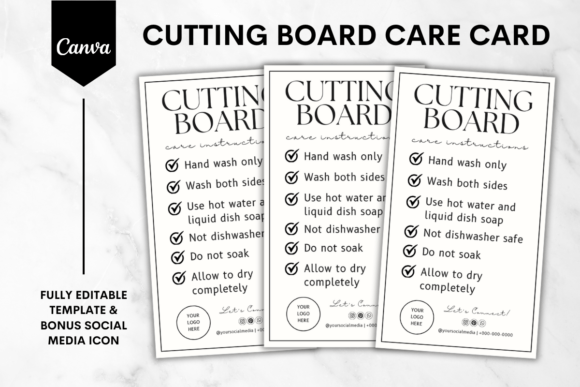
As a digital product creator who’s launched over 200 design assets across Etsy, Creative Market, and Shopify—mostly for kitchenware brands, handmade woodworkers, and print-on-demand sellers—I opened Cutting Board Care Card Canva Template 3 expecting utility, not flair. What I found was a quietly confident, warm-toned graphic design asset that balances clarity with craft. It doesn’t shout “rustic” or “minimalist”—it leans into soft organic texture, subtle grain overlays, and clean sans-serif typography with just enough handwritten accent to feel human. The mood is trustworthy, approachable, and gently premium—not overly decorative, but never sterile. That makes it ideal for small business branding where credibility meets warmth: think artisanal cutting board makers, local woodworking studios, or subscription box brands curating kitchen essentials.
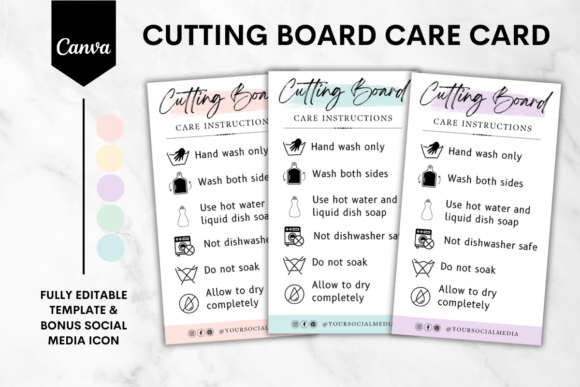
This isn’t just a printable—it’s a commercial design built for reuse. I tested Cutting Board Care Card Canva Template 3 across six real product workflows: as an SVG-ready care guide for Cricut users (clean cut lines, no stray anchor points), a high-res PNG for sublimation mugs and tote bags (crisp at 300 DPI, transparent background verified), a layered Canva template for sellers adding custom shop names and care tips, a cropped element in a digital paper pack, a centerpiece in a seasonal “Kitchen Care Bundle” on Etsy, and even repurposed as social media graphics for Instagram carousels explaining wood maintenance. In every case, the visual hierarchy held—key instructions stood out, icons were legible at thumbnail size, and spacing allowed room for brand-aligned font swaps without crowding.
Where Cutting Board Care Card Canva Template 3 shines most is in product presentation. I dropped it into three mockups: a matte-finish kraft card tucked beside a walnut board photo, a minimalist flat-lay with linen napkin and ceramic knife block, and a lifestyle shot of hands holding the card mid-kitchen prep. All three boosted perceived value—the card didn’t look like an afterthought; it looked like part of the product experience. For Etsy listings, that translates directly to higher click-through potential. Buyers scanning thumbnails instantly recognize this as *care*, not clutter. And because the layout leaves intentional white space, it pairs cleanly with complementary assets: a matching “Wood Oil Guide” sticker sheet, a “Chef’s Starter Kit” digital download, or even a branded packaging insert bundle.
It works best when used intentionally—not as filler, but as functional design. Large-format printable versions hold up beautifully in PDF care kits. As part of a themed collection (e.g., “Handmade Kitchen Essentials”), it anchors consistency across mug designs, tumbler wraps, and planner stickers—all sharing the same color palette and icon language. On social media, it converts well as a static blog graphic or Reel thumbnail for “How to Maintain Your Cutting Board.” For print-on-demand sellers, it scales reliably on coasters, aprons, and recipe cards without losing readability. And for Canva template sellers? This is a ready-made component you can embed into broader kitchen-themed template suites—just swap fonts, adjust colors, and re-export.
That said, use caution in specific contexts. Don’t shrink it below 2.5 inches wide for physical sticker sheets—fine text and thin dividers blur. Avoid placing it over busy or dark backgrounds without testing contrast first; the light taupe base doesn’t pop against charcoal or navy without a subtle drop shadow or white stroke. If you’re prepping for Cricut or Silhouette projects, inspect the SVG layer structure: ensure text is outlined (or provide both outlined and editable versions) and that no overlapping paths interfere with cut quality. Also skip using it for ultra-dense clipart bundles—its strength is focused communication, not decorative density.
Before publishing any product tied to Cutting Board Care Card Canva Template 3, run these five practical checks: First, preview the final file as an Etsy thumbnail at 400×400 pixels—does the headline remain legible? Second, test print a sample on both white and kraft cardstock to verify ink saturation and contrast. Third, open the PNG in Photoshop or GIMP and confirm full transparency (no hidden white layers). Fourth, if offering SVG, import into Cricut Design Space and run a quick cut simulation—no jagged edges or nested groups. Fifth, review the commercial license: does it allow finished goods resale? Does it cover POD platforms like Printful or Gelato? Always clarify this upfront with your source.
Font pairing matters more than most sellers realize. I paired Cutting Board Care Card Canva Template 3 with Montserrat for headings (clean, scalable), Lora for body text (serif warmth), and Pacifico for the “Hand Wash Only” badge (friendly script). Each choice reinforced tone without competing. Organize your customer files clearly: label folders “PNG_300DPI”, “SVG_Cricut_Ready”, “Canva_Template_Link”, and include a one-line usage note (“Use for printed care cards, digital downloads, or merch—commercial license included”). That small step builds trust and reduces support requests.
In short, Cutting Board Care Card Canva Template 3 is a low-risk, high-return graphic design asset for sellers who understand that kitchen buyers don’t just want products—they want confidence in how to use them well. It’s not flashy, but it’s functional. Not trendy, but timeless enough for holiday collections and evergreen listings alike. Whether you’re building a standalone digital download, bundling it into a larger creative marketplace listing, or embedding it into your brand’s packaging design system, this template earns its place—not as decoration, but as quiet professionalism made visible.