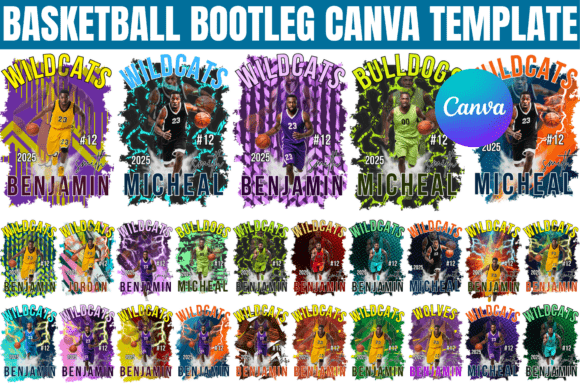
Basketball Bootleg Canva Template
First Impressions: Bold, Playful, and Built for Personality
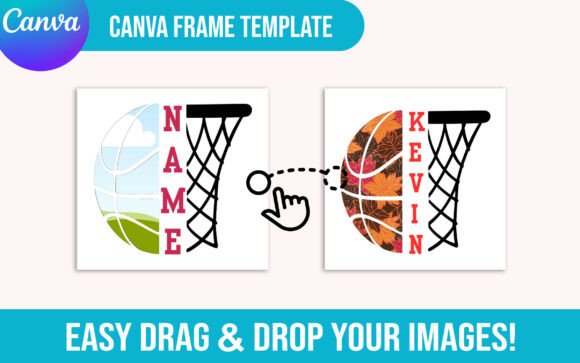
Opening the Basketball Bootleg Canva Template, I immediately felt its energy — not polished corporate, but confident, streetwise, and rhythm-driven. It’s got that loose, hand-drawn swagger common in rap-inspired apparel: thick outlines, exaggerated lettering, a basketball motif that leans into attitude more than realism. The layout feels intentional for chest placement on tees or front panels of tote bags — centered, with breathing room around key elements. As an embroidery designer, I don’t just see graphics; I see stitch paths, density zones, and how those lines will translate when pulled through fabric. This template doesn’t scream “fine detail” — it shouts “character,” which is exactly where it shines.
Real Project Test: Embroidering a Limited-Run Sweatshirt Line
Last week, I used the Basketball Bootleg Canva Template as the foundation for a small-batch embroidered sweatshirt series for a local youth basketball camp. We opted for a 4-inch chest placement on midweight cotton-poly blends — classic territory for bold, readable designs. What stood out was how well the template’s proportions held up after digitizing: the main wordmark stayed crisp, the basketball icon retained shape without collapsing, and the overall silhouette translated cleanly into satin and fill stitches. Customers responded to the vibe — not just the sport, but the confidence behind it. That tells me this isn’t just a t-shirt graphic; it’s a ready-made identity booster for craft businesses selling custom apparel, boutique merchandise, or personalized gifts.
Where It Excels in Real Embroidery Work
- Custom apparel & sweatshirt embroidery: Its strong negative space and chunky forms prevent stitch crowding — ideal for medium-density fill areas and clean satin borders.
- Tote bag design & aprons: Scales beautifully without losing impact, especially when stitched in high-contrast thread (think neon yellow on charcoal canvas).
- Embroidered patch & cap front work: Works best at 3–4 inches — any smaller risks losing legibility in the lettering or basketball outline.
- Holiday embroidery & personalized gifts: Fits perfectly on baby onesies (with simplified digitization), pillow covers for sports-themed nurseries, or kitchen towels for coach-themed housewarming gifts.
- Craft business & Etsy seller use: Offers instant brand cohesion across product types — pair it with consistent thread palettes and you’ve got a mini collection, not just a one-off design.
Where to Proceed With Care
The Basketball Bootleg Canva Template isn’t magic — it’s a starting point, and like any good design asset, it asks for thoughtful adaptation. On textured fabrics like terry cloth or heavy fleece, I recommend simplifying fine interior linework before digitizing. On stretchy knits (think lightweight tees), always pair it with cutaway stabilizer — the bold shapes hold up, but loose tension can blur edges. Dark fabric? Test thread contrast first: some of the bolder fills may need slightly heavier density to avoid looking washed out. And avoid placing it on curved surfaces like cap backs or tiny baby hats without adjusting spacing — tight curves distort letter spacing and icon alignment.
What It Does for Your Handmade Product — and Your Customer’s Experience
This template elevates perceived value without demanding advanced technical skill. When stitched cleanly, it reads as intentional, not generic — a subtle but powerful signal to buyers that your handmade product has personality *and* polish. For Etsy sellers, that translates directly to higher engagement: shoppers linger longer on listings with cohesive, mood-aligned embroidery. For small shop owners, it builds repeat trust — customers remember how sharp their last basketball-themed apron looked, and come back for matching tea towels or holiday stockings. And because it leans into bootleg charm rather than photorealism, minor stitching variances (like slight thread sheen shifts or subtle density adjustments) actually enhance its handmade appeal — no sterile perfection required.
Practical Notes Every Embroidery Designer Should Run Through
- Test the Basketball Bootleg Canva Template on scrap fabric first — especially if using textured, dark, or stretchy materials.
- Review stitch density in the main wordmark and basketball outline — dense areas may need slight thinning for breathability on wearables.
- Confirm hoop size compatibility: it’s designed for standard 4×4 or larger hoops, but double-check spacing if adapting for caps or curved items.
- Inspect small details like inner basketball lines or subtle shadow accents — they may simplify better than replicate stitch-for-stitch.
- Try black-and-white mockups: this design relies heavily on contrast, so verify readability before committing to final thread colors.
- Use proper stabilizer — medium-weight cutaway for knits, tear-away for stable wovens like canvas or linen.
- Check licensing terms before selling finished products or reselling digital assets — this is a digital download, not a commercial-use license by default unless explicitly stated.
Final Thought: A Design That Starts Conversations
I don’t reach for the Basketball Bootleg Canva Template when I need something quiet or minimalist. I reach for it when I want energy, authenticity, and immediate recognition — whether it’s on a custom embroidered tote for a pickup game, a limited-run sweatshirt for a school team fundraiser, or a playful baby bib for a little baller’s first season. It’s not just a graphics file. It’s a shortcut to attitude, a reliable anchor for craft business branding, and a genuinely flexible design asset — as long as you treat it like what it is: a strong foundation, not a finished embroidery file. Adapt it thoughtfully, test it honestly, and let its confidence do the rest.